Sourcing guide
Freestanding Bath Fillers: Rough-In, Height and Installation
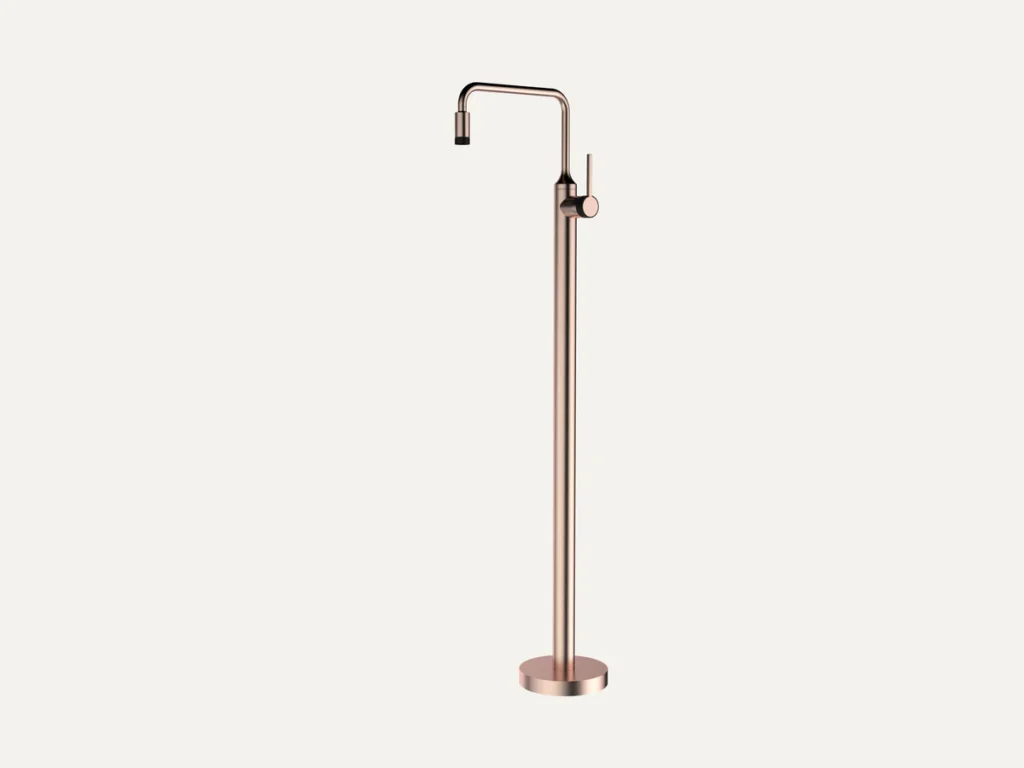
A freestanding bathtub is often the centrepiece of a premium bathroom, and the faucet that fills it is part of that picture. Freestanding bath fillers – floor-mounted mixers that stand beside the tub – look simple, but they depend on work done long before the bath arrives: a floor rough-in set at the right point, connected, tested and protected while the floor is finished. Mistakes are expensive, because correcting them means lifting tiles or stone.
This guide covers the main bath faucet types, how freestanding fillers are installed, the measurements to check against the tub, and what to specify.
Bath faucet types
| Type | Where it mounts | Suits |
|---|---|---|
| Freestanding bath filler | Floor, beside the tub | Freestanding baths in larger bathrooms |
| Wall-mounted bath mixer | Wall above the tub, exposed or concealed | Built-in baths and freestanding baths placed against a wall |
| Deck-mounted bath mixer | Tub rim or surrounding deck | Built-in and drop-in baths with a deck |
| Bath and shower mixer | Wall, with diverter to a hand or overhead shower | Bathrooms where the bath also serves as the shower |
How a freestanding bath filler is built
Most freestanding fillers have two parts, in the same way as other concealed faucets:
- Floor rough-in kit – a mounting base with hot and cold connections, fixed to the floor slab and connected to the supply pipes before screed and tiles are laid. It usually comes with a protective cover showing the finished floor level.
- Visible column – the riser with spout, mixer handle and usually a hand shower on a holder, fitted after the floor is finished.
Some designs place the mixing cartridge in the column; others use a thermostatic or manual mixer built into the base. Either way, the rough-in kit and column must belong to the same design.
The rough-in kit is installed weeks or months before the column. Supply it early, labelled for its room, together with the installation drawing that shows its position relative to the tub.
Measurements to check against the tub
- Column height and spout height. The spout outlet must sit above the tub rim and reach over it. Compare the filler height with the rim height of the chosen bath, including any feet or plinth.
- Spout reach. Water should fall inside the tub, clear of the rim, without splashing onto the floor. The distance from the column to the tub edge sets how much reach is needed.
- Position of the rough-in. Fix the floor base at the agreed distance from the tub and from walls, on the same side as the tub’s filling end, and where the hand shower hose can reach comfortably.
- Finished floor depth. The rough-in kit accepts a range of floor build-up heights, including screed, adhesive and tiles or stone. Thick stone floors and underfloor heating need checking.
- Hand shower hose length. Long enough to rinse the tub, short enough not to fall into the water when hung.
Flow and filling time
Bath fillers need more flow than basin faucets, because a large tub can take a long time to fill. Ask for the flow rate at the expected site pressure and compare it with the bath volume. Low-pressure buildings, upper floors fed from tanks and water-efficiency restrictors all slow filling. If a thermostatic mixer is used, confirm that its flow capacity suits a bath. The overhead shower guide discusses the same pressure questions for shower outlets.
Installation and testing
- Fix the rough-in base firmly to the structural floor, plumb and at the marked height.
- Pressure-test the connections before the floor is laid, and keep the protective cover on.
- Coordinate waterproofing around the base so that water cannot enter the floor.
- Flush the pipes before fitting the column, to keep debris out of the cartridge.
- Fit the column last and check that it is rigid: a freestanding column is leaned on, so a loose base is a common complaint.
Maintenance access
Once a floor is finished, the rough-in kit cannot easily be reached. Prefer designs where the cartridge can be replaced from the column, and where isolation valves are accessible. Ask which cartridge is used – see the faucet cartridge guide – and include spare cartridges and hoses with the order.
Finishes and matching
A freestanding filler is highly visible, so its finish should match the basin faucets, shower system and accessories in the same bathroom. Coloured PVD finishes such as brushed gold, gunmetal and black are popular for freestanding baths; the finishes guide compares the options. Concealed wall-mounted alternatives are covered in concealed vs exposed shower mixers.
What to put in your specification
- bath faucet type and mounting;
- column height, spout height and spout reach, checked against the tub;
- rough-in kit model and accepted floor build-up range;
- mixer type – manual or thermostatic – and flow rate at site pressure;
- hand shower, hose length and holder;
- finish, matched to the other fittings;
- installation drawing, labelling for the rough-in kit, and spare parts.
Use the faucet RFQ guide to put these points into a request for quotation. DACHENG faucets include freestanding bath fillers and bath and shower mixers; share the tub model and floor details when you send an inquiry.