Sourcing guide
Overhead Shower Heads: Sizes, Mounting Height and Water Pressure
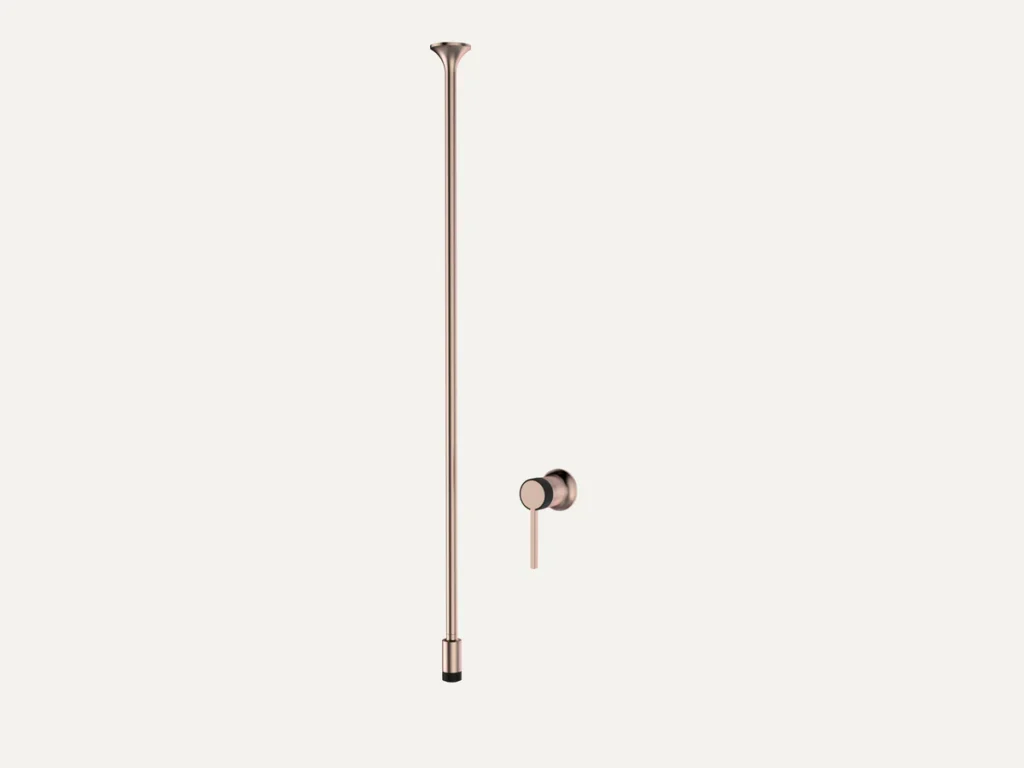
The overhead shower is often the first thing a guest notices in a hotel bathroom and the first thing a homeowner complains about if it disappoints. A large rain shower looks impressive in a catalogue, but on a low-pressure supply it can deliver little more than a gentle drip. Choosing the right head size, arm, height and flow for the building matters as much as the design.
This guide covers overhead shower sizes, mounting options, pressure and flow, materials and nozzles, and what to specify for a shower system that performs on site.
Common overhead shower sizes
| Size (round or square) | Typical use | Notes |
|---|---|---|
| 200 mm (8″) | Standard residential showers, smaller shower enclosures | Works on modest pressure; easiest to fit |
| 250 mm (10″) | The most common “rain shower” size for homes and hotels | Good balance of coverage and performance |
| 300 mm (12″) | Larger showers and walk-in areas | Needs good flow; check pressure on upper floors |
| 400 mm (16″) and above | Premium suites, villas, ceiling-recessed designs | Needs high flow and a suitable supply; often ceiling-mounted |
A larger head spreads the same amount of water over a wider area. If the flow is limited by pressure or by a water-efficiency restrictor, a very large head gives a softer, less satisfying spray. In many projects, a 250 mm head with good flow feels better than a 400 mm head with weak flow.
Mounting options
- Wall arm. The head hangs from an arm that projects from the wall, usually 300–450 mm long. The arm length should bring the head over the centre of the standing area, not over the user’s back against the wall.
- Ceiling arm. A vertical drop pipe from the ceiling, used where the ceiling is accessible and the head should sit centrally in the shower.
- Ceiling-recessed or flush. The head sits in or flush with the ceiling. It needs coordination with the ceiling contractor and access for maintenance.
- Exposed shower column. The overhead head, hand shower and mixer are mounted on a rigid riser, with the pipework outside the wall. This suits renovations where concealed pipework is not practical – see concealed vs exposed shower mixers.
Mounting height
Set the head height from the finished floor, allowing for tall users and for the spray angle. Many projects place the face of the overhead shower somewhere around 2.1–2.3 m above the finished floor, but the right height depends on ceiling height, arm type and local practice. Agree it on the drawing before the outlet elbow is fixed in the wall or ceiling, because it cannot easily be moved after tiling.
Pressure and flow
Two figures decide how a shower performs: the water pressure available at the shower and the flow rate the head and mixer allow.
- Minimum working pressure. Ask for the minimum pressure at which each head and hand shower performs as intended. Buildings fed from roof tanks by gravity, or upper floors with weak pumps, may need heads designed for low pressure.
- Flow rate. Many markets and green building schemes set maximum flow rates for showers. In the United States, for example, WaterSense-labelled shower heads are limited to 2.0 gallons per minute. Ask for the measured flow at a stated pressure, and confirm whether a flow restrictor is fitted.
- Mixer and diverter capacity. The valve and the diverter must pass enough water to feed a large overhead head. A small manual cartridge can limit a large shower more than the head itself.
For a project, test the chosen shower head and mixer together at the pressure expected on site. Catalogue photos and product names say nothing about how a shower feels at 1 bar.
Materials and finishes
- Stainless steel plate heads – thin, flat heads made from 304 stainless steel. Light, durable and well suited to brushed and PVD finishes.
- Brass heads – heavier and solid; usually plated or PVD finished.
- Plastic (ABS) heads – plated plastic is light and inexpensive and is widely used for hand showers and some overhead heads. Check plating quality and the thickness of the face plate.
Where several finishes are offered, make sure the head, arm, hand shower, hose and mixer all come from the same finishing process, so that colours match. The finishes guide explains the options.
Nozzles and spray
Most overhead heads use soft silicone nozzles. Limescale can be rubbed off them by hand, which matters in hard-water areas, as described in the guide to faucets and showers for Gulf markets. Check the number and spacing of nozzles: too few and the spray has gaps; too many on a low flow and each jet is weak. Multi-function overhead heads may add mist or waterfall modes, but they also add parts to maintain.
Hand shower, hose and outlets
- Hand shower – spray modes, weight, and whether it uses the same nozzles and finish as the overhead head.
- Hose – length (1.5 m is common), the inner hose material and whether the outer is stainless steel or PVC, and anti-twist connectors.
- Outlets – how many outlets the diverter controls (overhead, hand shower, bath spout, body jets), and whether only one or several can run together.
What to put in your specification
- overhead head size, shape and material;
- arm type and length, or ceiling drop length;
- mounting height from finished floor, on the project drawing;
- maximum flow rate and minimum working pressure;
- nozzle type and spray modes;
- hand shower, hose length and wall elbow or slide rail;
- mixer type – manual or thermostatic – and diverter outlets;
- finish, matched across all parts of the system.
Put these points into your request for quotation using the faucet RFQ guide. DACHENG shower systems cover concealed, exposed and thermostatic sets in chrome, brushed gold, rose gold, gunmetal and black; share the head size, mounting type and building pressure when you send an inquiry.