Sourcing guide
Kitchen Faucets: Pull-Down vs Pull-Out and What to Specify
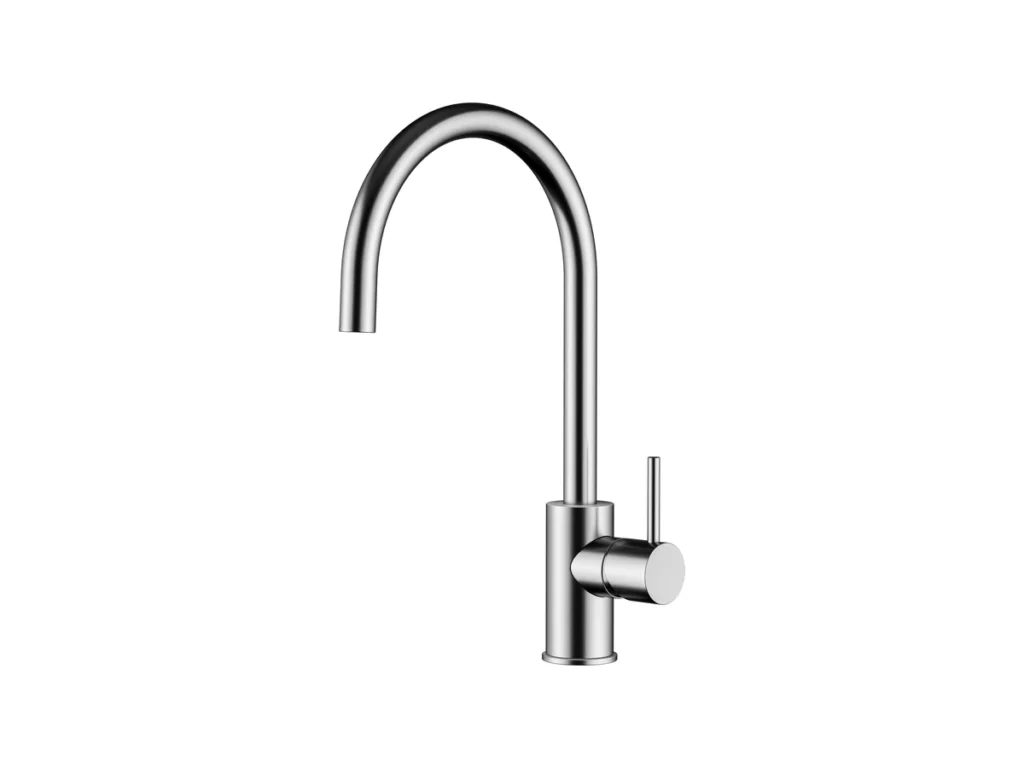
Kitchen faucets work harder than any other faucet in the home. They are used dozens of times a day, for filling pots, rinsing vegetables and cleaning the sink, and users notice immediately if the spout is too short, the spray hose sticks or the faucet clashes with the window behind the sink. For importers, kitchen faucets are also one of the categories where design choices – spout type, height and reach – most affect whether a model sells.
This guide compares the main kitchen faucet types, explains the measurements that decide whether a faucet fits a sink, and lists what to specify.
Main kitchen faucet types
| Type | Description | Best for |
|---|---|---|
| Fixed spout, single lever | Swivel spout with no spray; the simplest design | Price-driven ranges, rental units, secondary sinks |
| Pull-down | High arched spout; the spray head pulls straight down into the sink | Deep single-bowl sinks, filling tall pots, modern kitchens |
| Pull-out | Lower spout; the spray head pulls out towards the user | Smaller sinks, kitchens with a window or shelf above the sink |
| Semi-professional (spring) | Exposed spring column with a hose and spray head | Large kitchens and buyers who want a commercial look |
| Wall-mounted | Valve in the wall; the spout projects over the sink | Projects with planned wall pipework; pot fillers |
| Filter or 3-way faucet | Separate waterway for filtered drinking water | Markets where filtered water at the sink is popular |
Pull-down vs pull-out
Both designs use a spray head on a hose that runs inside the spout, with a counterweight under the sink to pull the hose back. The difference is the shape of the spout and the direction of use.
- Pull-down faucets have a tall, arched or gooseneck spout. The head comes down into the sink, which makes them good for rinsing and for filling tall pots. They need clearance above the sink, and with a shallow sink they can splash.
- Pull-out faucets have a lower spout. The head comes towards the user and can reach further outside the sink, for example to fill a container on the worktop. They fit under low shelves and windows.
Before choosing a tall pull-down model for a project, check the height under any window, shelf or wall cabinet behind the sink, including when the window is opened.
The measurements that matter
- Overall height – from the worktop to the top of the spout. Tall gooseneck faucets can exceed 400 mm.
- Spout height (clearance) – from the worktop to the outlet; decides what fits under the faucet.
- Spout reach – from the centre of the faucet to the outlet. The water should land near the centre of the bowl; too short and it hits the back of the sink, too long and it splashes the front.
- Swivel angle – 360° or limited. For double-bowl sinks the spout must reach both bowls.
- Hose length – how far the spray head can be pulled; ask for the working length, not only the total length.
- Mounting hole and worktop thickness – the hole size (commonly 32–35 mm) and the maximum worktop thickness the fixing kit accepts, especially for thick stone tops.
Spray heads and hoses
- Spray modes – usually aerated stream and spray, sometimes with a pause function or a powerful “blade” spray for cleaning.
- Docking – a magnetic or mechanical dock keeps the head firmly in place; weak docking is a common complaint.
- Hose – nylon-braided hoses glide smoothly through the spout; check the inner tube material and the quick connector.
- Nozzles – silicone nozzles make scale easier to remove in hard-water areas.
Body material and finish
Kitchen faucets are often made in brass or 304 stainless steel. Stainless steel suits brushed finishes and markets concerned with lead, as explained in brass vs stainless steel vs zinc and lead-free brass faucets. Kitchen faucets are cleaned often and touched with greasy hands, so finish durability matters: brushed stainless steel and PVD finishes hide fingerprints and wear better than many painted colours. The options are compared in the finishes guide.
Inside the faucet
A single-lever kitchen faucet usually uses a 35 mm or 40 mm ceramic cartridge; larger cartridges are common because kitchen faucets need higher flow. Check the cartridge type and the flexible supply hoses, including their length and connection thread for the destination market – the faucet cartridge guide explains the details.
What to put in your specification
- faucet type: fixed, pull-down, pull-out, spring or filter;
- overall height, spout height and spout reach;
- swivel angle and hose working length;
- spray modes and docking type;
- body material and finish;
- cartridge size, supply hose length and thread;
- mounting hole size and maximum worktop thickness;
- flow rate limit for the destination market, if any.
Put these points into a request for quotation with the faucet RFQ guide. DACHENG faucets include pull-down and gooseneck kitchen models in several finishes; share sink type and worktop details when you send an inquiry.