Sourcing guide
304 vs 201 Stainless Steel Vanities: How to Tell the Difference
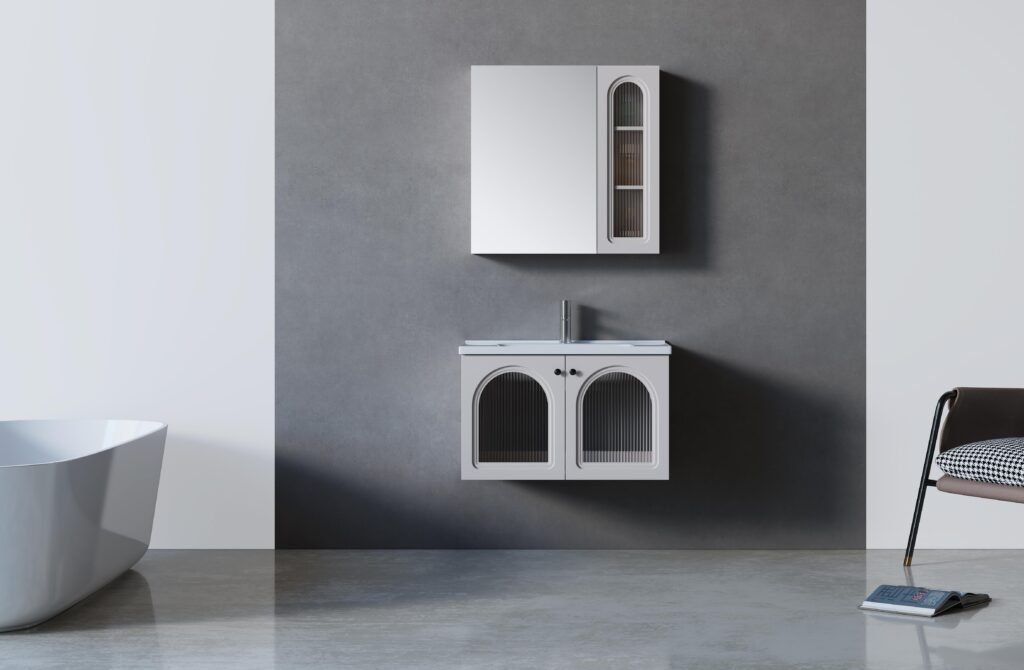
“Stainless steel” on a vanity listing tells you very little. The difference between grades is invisible on a new cabinet, but it decides whether the vanity still looks good after three years in a humid bathroom or starts to show rust spots around the hinges and the bottom edge. For importers, the grade is also the easiest place for a price difference to hide.
This guide explains how the common grades differ, why a magnet will not tell you the answer, and how to check the grade you are actually buying.
The grades you will meet
| Grade | Main alloying elements (approx.) | Corrosion resistance | Typical use in vanities |
|---|---|---|---|
| 304 | 18% chromium, 8% nickel | Good in normal bathroom conditions | Cabinet body, doors and frames in quality ranges |
| 316 | As 304, plus molybdenum | Better against chlorides | Coastal locations, pools, spas |
| 201 | 16–18% chromium, lower nickel, more manganese | Lower; prone to surface rust in damp or chlorinated conditions | Low-cost cabinets and hidden parts |
| 430 | About 17% chromium, no nickel | Moderate; magnetic | Back panels, internal parts in some cabinets |
The key difference is nickel. Grade 201 replaces much of the nickel in 304 with manganese and nitrogen to save cost. It looks the same and is still called “stainless steel”, but its resistance to corrosion – especially pitting from chlorides in cleaning products and tap water – is lower.
Why 304 matters in a bathroom
A vanity sits in one of the harshest environments in the home: daily steam, water standing on the base after cleaning, and cleaning products that often contain chlorine. In these conditions a 304 cabinet usually stays clean with ordinary care, while a 201 cabinet is more likely to develop rust spots, starting at cut edges, welds, hinges and the bottom of the cabinet where water collects.
Not every part needs to be the same grade. Some manufacturers use 304 for the visible body and doors and a different grade for internal shelves or back panels. That can be a reasonable cost decision, provided it is stated in the specification and priced accordingly.
Why the magnet test does not work
Many buyers are told to hold a magnet to the cabinet: “if it sticks, it is not 304”. This is unreliable. Grades 304 and 201 are both austenitic and largely non-magnetic in the annealed state, but both can become slightly magnetic after bending and forming, which every cabinet goes through. Grade 430 is clearly magnetic, so a magnet can identify 430 – but it cannot tell 304 from 201.
Reliable ways to check the grade
- Handheld XRF analyser. The most reliable on-site method. It measures the chromium, nickel and manganese content in seconds. Most third-party inspection companies can bring one to the factory or the warehouse.
- Chemical test solutions. Spot-test liquids react to nickel content and show a colour change. They are inexpensive and useful for a quick check during sampling, but they are less precise than XRF.
- Mill test certificate. The steel mill’s material certificate states the grade and composition of the coil. Ask for it, and ask how the factory links the certificate to the material used in your production.
- Laboratory analysis. For disputes or high-value projects, a sample of the sheet can be sent to a laboratory for chemical analysis.
Check the grade on painted or powder-coated cabinets on an uncoated area, such as a cut edge or the inside of a panel – coatings interfere with surface tests.
Thickness: the other hidden variable
Two cabinets in the same grade can still differ in quality because of sheet thickness. Thicker sheet gives stiffer doors that stay aligned, panels that do not flex when pressed, and better resistance to dents. Ask for the thickness of each main part – body, doors, base, countertop frame – and check it with a caliper on samples. Measure on bare metal, because a coating adds to the reading.
Welds, edges and fixings
- Welds should be cleaned of heat discolouration. Untreated weld areas are where corrosion often starts, even on 304.
- Cut edges should be smooth and folded or protected where they meet water.
- Hinges, screws and handles should be stainless as well. A 304 cabinet with plated steel screws will still show rust streaks.
- Feet and base: adjustable feet that lift the cabinet off the floor keep the base out of standing water.
Care still matters
Even 304 can show surface staining if it is cleaned with bleach, chloride-based or abrasive products, or contaminated with iron particles from tools. A short care card in the box – mild detergent, soft cloth, rinse and dry, no bleach or steel wool – reduces complaints and is worth requesting in your market’s languages.
What to put in your specification
- steel grade for each part: body, doors, base, internal parts, hinges and fixings;
- sheet thickness for each main part;
- surface finish and coating, with an agreed colour sample;
- how the grade will be verified – mill certificate, XRF at inspection, or both;
- the care information to be included in the box.
For a broader comparison with MDF and plywood cabinets, see stainless steel vs MDF vs plywood vanities. DACHENG’s stainless steel vanity range covers stainless steel vanities and mirror cabinets in several widths; the steel grade and sheet thickness for each model are confirmed with the quotation, so include your requirements when you send an inquiry.